Brand identity built for recognition, coherence and growth.
I design brands, visual systems and applications that connect strategy, identity, digital touchpoints and AI-supported exploration.
Brand identity starts with recognition.
A brand should make a project easier to recognize, remember and trust. The logo matters, but brand identity also includes visual language, typography, colors, tone, applications, rules and the way every touchpoint communicates the same direction.
A weak identity creates confusion. A strong identity gives people a clearer signal: what the project is, what it stands for and why it deserves attention.
From idea to visual direction.
Brand design starts with research, context and positioning. A new identity needs to understand the business, the audience, the market, the tone and the type of perception the brand wants to build.
AI can support this phase by accelerating research, competitor analysis, naming exploration, visual references and concept directions. The final choice still needs design judgment, taste, experience and a clear understanding of what can work over time.
Logo, symbol and visual identity.
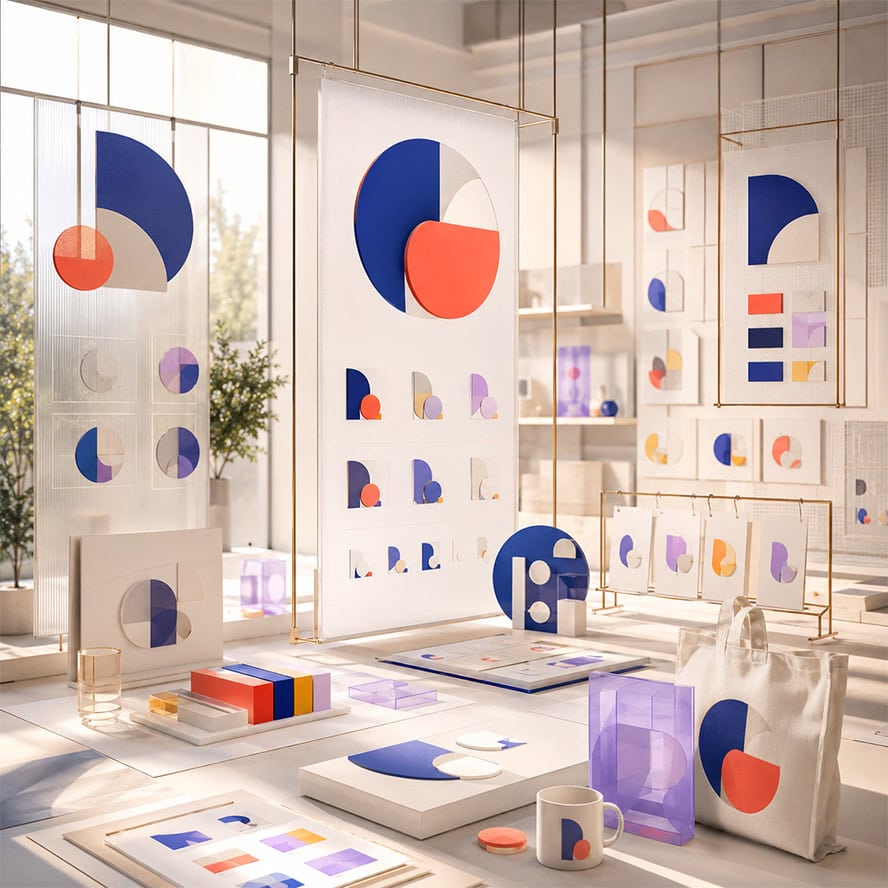
A logo should work across different sizes, formats and contexts. It needs balance, clarity, recognition and technical precision. Vector construction, proportions, spacing, positive and negative versions, color variations and minimum sizes all matter.
The goal is to create an identity that can live inside websites, ecommerce experiences, digital platforms, presentations, social content, printed materials, merchandise and other brand applications with consistency and control.
A system, not isolated graphics.

Brand identity becomes stronger when it turns into a structured visual system. Typography, color palette, icon style, illustration language, layout rules and recurring visual elements help the brand stay coherent across different materials and collaborators.
This connects naturally with design system work. The brand defines the visual personality. The design system helps translate that personality into reusable rules, components and digital consistency.
Applications and touchpoints.

A brand needs to work in real situations, not only in a presentation. Website headers, landing pages, app interfaces, social posts, newsletters, pitch decks, business cards, brochures, signage and merchandise all test the strength of the identity.
Each application should feel part of the same world, with enough flexibility to adapt and enough structure to stay recognizable.
Merch design and branded product lines.

Brand identity can also become a tangible product system: apparel, stationery, accessories, packaging-adjacent materials and branded objects can extend recognition beyond digital touchpoints.
When designed with the same visual rules, these elements strengthen brand presence, create community value and can become an additional business opportunity instead of simple decoration.
Brand extensions, Web3 and fan engagement.

Brand identity can also extend into digital collectibles, NFT projects and fan engagement experiences when the concept makes sense.
In these contexts, visual identity, storytelling, edition logic, naming, descriptions and launch mechanics need the same level of care as any other brand touchpoint.
Web3 can become a useful space for experimental projects, community activation and digital ownership when strategy, creativity and execution stay aligned.
Main areas for brand design.
- Naming for new brands, products and services, including domain research when needed.
- Logo, symbol and visual identity design.
- Color palettes, typography, visual rules and brand applications.
- Positive, negative, full and compact logo versions.
- Minimum size, clear space and usage rules.
- Icon sets, illustrations and vector assets.
- Brand guidelines for internal teams and external partners.
- AI-supported research, naming exploration, visual directions and consistency checks.
- Brand applications for digital, print, presentations, merchandise and special projects.